



Outside Director MessageMessage from Outside Directors
Outside Director MessageMessage from Outside Directors
Director (Outside Director) Wataru SueyoshiSueyoshi Outside Director
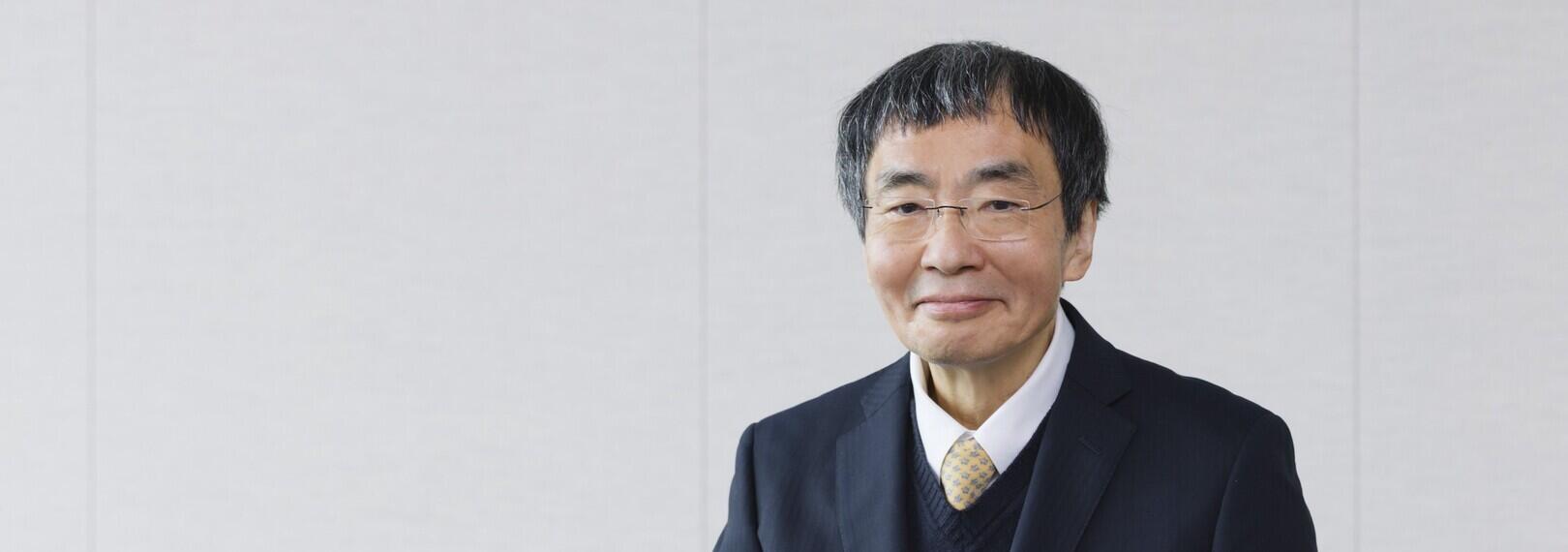
I will fulfill the trust placed in me by shareholders by leveraging my expertise and independence as a lawyer to oversee and monitor management.
I will fulfill the responsibilities entrusted to me by shareholders by exercising expertise and independence as an attorney supervising and monitoring management.
Diversity creates dynamism in discussions.
Diversity Inspires Dynamic Discussion
Mitsubishi Estate provides ample opportunities for outside Director to receive information. This includes business briefings explaining the status of each business the company is promoting, site visits to facilities developed or operated by the company, and even lectures on business operations before assuming the position of outside Director. I was appointed as an outside Director in June 2023, and the amount of information provided by the executive side is very abundant; I have never felt that they were withholding information. Furthermore, if there is anything that is lacking, they investigate and provide answers immediately, and they actively provide a forum for discussion. From fiscal year 2025, as a new initiative based on an evaluation of the effectiveness of Board of Directors, a forum has been established after Board of Directors where directors can freely exchange opinions not only on individual company businesses, but also on themes that each Director is interested in, such as global affairs and market trends. This creates a system where fruitful discussions are possible and is useful for management oversight.
Over the past three years, our governance reforms have progressed at a remarkable pace. This was made possible because a sense of crisis was shared within the company—the feeling that "Mitsubishi Estate is not receiving the recognition it deserves from the capital markets"—and active discussions ensued. To further reform, it is crucial to continue working to improve the diversity of Director. Diversity of backgrounds guarantees diversity of ideas. When opinions are exchanged from multiple perspectives based on each person's experience, new insights are gained, and at the same time, emergent discussions that bring risks to light become apparent. This dynamism that moves towards conclusions is also important in risk management.
In June 2026, Mr. Shirakawa and Mr. Narikawa, who had served as our outside Director for many years, retired, and Mr. Watanabe and Mr. Oki joined the board as new members. Board of Directors believes that generational change is naturally necessary due to its nature. As mentioned above, we provide our outside Director with a wealth of information, and we have no concerns regarding the continuity of our governance functions and effectiveness. Furthermore, with Mr. Oki's appointment, the proportion of female Director has also increased. Market demands for increased diversity, independence, and transparency on Board of Directors are growing year by year, and we at the company strongly recognize the importance of these demands. We intend to continue promoting governance reforms in the future.
Mitsubishi Estate provides substantial opportunities for information to be conveyed to outside directors. The Company offers business briefings on the status of each business it operates as well as site tours of properties it has developed or is operating. It also invites appointed outside directors to attend lectures on its business even before they have formally taken up the position. I began serving as an outside director in June 2023. The executive team provides very extensive information, so I have absolutely no sense of discomfort that the Company might be withholding information. Moreover, if and when anything may be lacking, they look into it immediately, and I receive an answer straightaway. The Company also actively creates occasions for discussion. Since fiscal 2025, the Company has taken action on a feedback item from the evaluation of the effectiveness of the Board of Directors by holding an additional forum right after each Board meeting where the directors can freely exchange views, not only on the Company's individual businesses, but also on themes that each director is interested in, such as global affairs and market trends. This system facilitates truly substantive interaction, which is very helpful in the process of management supervision.
Over the past three years, the Company's governance reforms have progressed with astonishing speed. I think these gains have been achieved precisely due to the shared internal sense of crisis that capital markets may not value Mitsubishi Estate in line with its true worth, a concern which drove much conversation. To achieve further reform, it is important to continue working to increase the diversity of the directors. Diversity of backgrounds ensures diversity of ideas. Sharing opinions from multiple perspectives based on our respective experiences allows new insights to emerge, while also ensuring that risks come to light organically via the interaction. This dynamic energy, moving from conversation to conclusions, is the very thing also most required for effective risk management.
In June 2026, long-serving outside directors Masaaki Shirakawa and Tetsuo Narukawa retired, and we welcomed Hajime Watanabe and Yuri Okina as new members. Given the very nature of the Board of Directors, I believe that generational change is naturally needed. As I mentioned earlier, the Company provides outside directors with very extensive information, so I do not have any concerns about the continuity of governance functions or their effectiveness. The appointment of Yuri Okina has also increased the percentage of women on the Board. Demands from the market related to enhancing the diversity of the Board of Directors, increasing its independence, and ensuring transparency, have been increasing year after year. Mitsubishi Estate is intensely aware of the importance of these demands, and the Company intends to continue pushing forward with governance reforms.
Leveraging his expertise as a lawyer, he leads Board of Directors and supports management.
Contributing to the Board of Directors and Supporting Management with Expertise as an Attorney
We recognize that the management policy outlined in the "Long-Term Management Plan 2030," which places social value enhancement strategies and shareholder value enhancement strategies on two wheels, is in line with the fundamentals of our management strategy. In particular, regarding sustainability initiatives within the social value enhancement strategy, we have carefully discussed them while taking into full consideration the economic situation and the concerns of our shareholders and investors, and I believe that they have become substantial in content based on a long-term perspective. In order to further integrate and promote these two strategies, we have concretized medium- to long-term targets for the social value created by each business in fiscal year 2025, and from fiscal year 2026, we have also started to manage progress on a yearly basis in our annual plans. As Board of Directors, we need to not only evaluate whether these targets have been achieved or not by looking at the numbers, but also identify the issues and monitor them if they have not been achieved.
As we enter the second half of our long-term management plan, we are now in a phase of monitoring with a stronger focus on our 2030 goal, and I believe we have made good progress so far. The real challenge lies ahead. The business environment is changing moment by moment, from the actions of the Trump administration and geopolitical risks to rising prices. In the midst of these rapidly changing circumstances, we may face extremely difficult situations where we are forced to make decisions that are high-risk but necessitate taking action, or even to change our strategy, according to general management principles. As Board of Directors, it is necessary to appropriately oversee the acceleration and braking of such management decisions, and as a lawyer, I always approach these discussions based on the "business judgment rule."
The "business judgment rule" is a standard used to determine whether Director Director has legal responsibility and whether they have violated their duty of care and loyalty. This standard evaluates: ① whether the underlying facts were sufficiently understood; ② whether multifaceted discussion and consideration were guaranteed in the decision-making process, and whether expert opinions were sought as necessary; and ③ whether a reasonable choice was made from appropriate options, weighing the pros and cons. Based on these evaluations, lawyers prepare legal opinions to objectively guarantee whether the company's decision-making process was rational. This approach and process are very effective in enhancing the effectiveness of management oversight.
To achieve our long-term management plan, Board of Directors must continue to flexibly examine changing circumstances and deepen forward-looking discussions. However, if we set 2030 as our sole goal, we risk overextending ourselves to achieve it, potentially leading to exhaustion and a decline after 2030. Taking these concerns into account, we must flexibly consider the possibility of revising target figures or making adjustments in line with changes in the external environment, and I recognize that being able to strike this balance will be a crucial challenge going forward. It is in such situations that the "principles of business judgment" come into play. I understand that one of my roles is to check Board of Directors' discussions from the perspective of these principles and verify the validity of their decisions, and I will continue to contribute to the sustainable growth of our company's corporate value.
The Long-Term Management Plan 2030 has positioned strategies to increase social value and strategies to increase shareholder value as the two strategic drivers, and I believe this is consistent with the fundamentals of the Company's management strategy. In particular, the Company carefully discussed and deliberated repeatedly on the sustainability initiatives which form part of the strategies to increase social value, giving full consideration to economic conditions as well as the interests of shareholders and investors. I believe the resulting positioning is substantive and grounded in a long-term perspective. In order to further integrate and pursue this approach based on two strategic drivers, in fiscal 2025, the Company set more concrete medium- to long-term targets relating to the social value each business will create. In fiscal 2026, the business groups also began managing progress on these targets on a single-year basis as part of their annual plans. The Board of Directors must not only look at the figures to evaluate whether these targets are achieved or not but also identify issues and continue to perform monitoring when targets are not met.
As the Company moves into the second half of the Long-Term Management Plan 2030, the Board has moved into the stage of monitoring progress with an even stronger awareness of the 2030 goals. The assessment is that progress has been smooth so far. What we need to be careful about is what happens from now on. The business environment is changing by the minute, be it developments in the Trump administration, geopolitical risks, or even such things as inflation. Amid such dramatically changing conditions, the Company may face very difficult situations, as is commonly the case in management. This could include the need to make high-risk but urgent decisions to step forward, or at times being forced to switch our strategy. As a Board of Directors, we need to appropriately oversee the calibration between the accelerator and the brake in such business decisions. As an attorney, I always approach such discussions based on the business judgement rule.
The business judgement rule is a standard for confirming whether directors bear legal responsibility: that is, whether directors have violated the duty of care of a prudent manager and the duty of loyalty. This standard evaluates firstly whether their understanding of the underlying factual basis was adequate, and secondly whether multifaceted discussion took place in the decision-making process, and whether the opinions of experts were sought as necessary. On that basis, it then evaluates thirdly whether a reasonable choice was made from among the appropriate options by determining the relative advantages and disadvantages. Based on these evaluations, attorneys prepare legal opinion letters, objectively certifying whether the company's decision-making process was reasonable. This way of thinking and this process are also highly effective in enhancing the effectiveness of management oversight.
Achieving the goals of the long-term management plan means the Board of Directors must continue to flexibly examine changes in circumstances and deepen its forward-looking discussion. On the other hand, treating 2030 alone as the goal also creates a risk that the Company will work too hard to achieve it, which could lead to a loss of energy after 2030 and a subsequent downward trend. Taking these concerns into account as well, the Company needs to remain flexible and consider the possibility of revising its target figures or adjusting them in response to changes in the external environment, as necessary. As such, I recognize that the Company's ability to strike the right balance will be a critical challenge moving forward. It is precisely in such situations that the business judgment rule works well. I understand that one of my roles is to check the Board of Directors' discussions from the perspective of this rule, and to verify the validity of its judgments, and I will continue to contribute to the sustainable growth of the Company's corporate value in this way going forward.
Is "bad news first" working?
Effective Functioning of the "Bad News First" Approach
Our Audit Committee consists of five members, two of whom are full-time auditors, and one is an internal Director. In my experience, it is common for full-time auditors to be from within the company, and I believe this is because they can gather information quickly and in a timely manner precisely because they are from within the company. Being within the company allows them to grasp the reality on the ground and keep a close eye on everything, and having their own information network is also a strength. Even with the most important information, such as scandals, full-time auditors are able to quickly catch on, and I believe that by having outside Director quickly grasp and consider such information, more accurate and effective supervision and auditing becomes possible.
What becomes crucial is whether the "bad news first" principle is functioning properly when sharing information among committee members. Dealing with misconduct is difficult to eliminate because it relies on the personalities of the committee members who disseminate and receive the information, and it's not the case that there are no problems simply because the audit committee members are external. It is important that a system is in place in place that allows full-time audit committee members who become aware of unforeseen circumstances or misconduct to share information appropriately and without hesitation with the audit committee chairman, other audit committee members, and Board of Directors and to respond swiftly.
Our company has established an environment where even minor incidents before unforeseen events occur can be shared and addressed, thanks to the full-time auditors acting as a bridge between them and the outside Director. I recognize that one of my roles as an auditor is to provide feedback from the perspective of the "business judgment rule" as a lawyer, based on the information shared by the full-time auditors who are skilled at gathering information, and to engage in objective discussions as an outside auditor.
Two of the Company's five Audit Committee members are full-time members, and inside directors serve in this role. In my experience, it is common for people from within a company to serve as full-time auditors, and I believe that this is because there is certain information they can gather quickly and in a timely manner precisely because they are insiders. Because they are on the inside, they can ascertain the reality on the ground and keep a close eye on everything. Having their own personal information networks is also a strength. I believe they can identify even the most critical information, such as misconduct, quickly, precisely because they are full-time Audit Committee members, and when outside directors then promptly assess and review such information, it enables more accurate and effective oversight and auditing.
What becomes important in this process is whether the "bad news first" approach to sharing information between committee members functions effectively. In dealing with misconduct and other forms of wrongdoing, it is difficult to eliminate the personal element, that is, dependency on the committee members who disseminate the information and those who receive it. Having outside Audit Committee members does not automatically remove this problem. What matters is whether a system has been established that enables a full-time Audit Committee member who has found out about some unforeseen event or misconduct to share the information appropriately and without hesitation with the chairperson of the Audit Committee, other Audit Committee members, and the Board of Directors, enabling an agile response.
At Mitsubishi Estate, by having the full-time Audit Committee members liaise with the outside directors, the Company has built an environment for sharing and dealing even with minor incidents that take place before an unforeseen event occurs. I recognize that one of my roles as an Audit Committee member is to make observations as an attorney from the perspective of the business judgement rule about information shared by the full-time Audit Committee members, who are well-positioned to gather the information, and to discuss such information with objectivity as an outside Audit Committee member.
As One Team talent will further enhance corporate value.
Further Enhancing Corporate Value with Human Resources Working "As One Team"
Our company considers human resources to be our greatest asset, and in order to sustainably improve corporate value, we are developing personnel who can demonstrate three competencies: "Professional," "Change Maker," and "As One Team." From my experience, outstanding individuals often possess sharp individuality, which I believe corresponds to directions such as "Professional" and "Change Maker," where high levels of expertise are required. However, if we have only such individuals, steering the company becomes difficult. That is why I believe that personnel who can unite as a team, "As One Team," are of utmost importance.
Furthermore, I believe it is necessary to cultivate human resources who possess not only the three competencies but also EQ (emotional intelligence). Our urban development business is a long-term endeavor. By further strengthening our human resource strategy to cultivate individuals who possess not only excellence but also emotional richness, we can deepen mutual respect based on unwavering beliefs, demonstrate strong teamwork, and achieve our goals in long-term projects.
I intuitively suspect that our company culture and ideal employee profile are rooted in rugby, which is why we strongly support it and have adopted "As One Team" as a competency. It's about highly skilled individuals leveraging their strengths to become one team and strengthen our competitiveness. It's truly the spirit of "one for all, all for one." Through my interactions with our employees, I feel that this "As One Team" culture is definitely being fostered. I believe that if we can further develop the abilities of these individuals, our corporate value will increase even more, and we can achieve our goal of becoming the "world's number one developer."
Mitsubishi Estate regards human resources as its greatest asset and cultivates human resources who can demonstrate the three competencies of being a "Professional," a "Change Maker," and working "As One Team" with the aim of driving continuing growth in corporate value. Speaking from my experience, I believe that many talented people have strong personalities compatible with being a "Professional" and a "Change Maker," which require high levels of expertise. However, if the organization is made up exclusively of such people charting their own path, it can become difficult to steer overall. That is why I believe having human resources who work "As One Team" and can organize that team are the most important.
Furthermore, I think the Company needs to foster human resources who possess emotional intelligence (EQ) in addition to the three competencies. The urban development in which Mitsubishi Estate engages is a business with a long-term perspective. Further strengthening the Company's human resources strategy to combine not only excellence but also richness of spirit could deepen mutual respect based on the constant conviction to display strong teamwork and achieve goals even in business over the long term.
My intuitive guess is that Mitsubishi Estate's corporate culture and concept of ideal human resources may actually have roots in the nature of the sport of rugby, and that is why the Company enthusiastically supports the sport and has adopted working "As One Team" as a competency. People with strong personalities forming "One Team" to enhance competitiveness, while simultaneously displaying their individual characteristics — that is most definitely the spirit of "One for All, All for One." In my interactions with the Company's employees, I feel that a culture of working "As One Team" is certainly being fostered. If the Company can further develop these capabilities of its human resources going forward, I expect that its corporate value will increase even more and Mitsubishi Estate will be able to achieve its goal of becoming "The World's Leading Developer Group."
August 2026
August 2026
Director (Outside Director) Ayako SonodaSonoda Outside Director

The combination of open dialogue and high expertise is the source of increased corporate value
Combining an Open Approach to Dialogue with a High Level of Specialist Expertise—the Key to Enhancing Corporate Value
I was appointed as an Outside Director of the Company in June 2023, but even before I took up the position, I knew the company to be very friendly and open to dialogue. Now, as an Outside Director, I am involved in management from the inside, and I can once again sense this open-mindedness from President & Chief Executive Officer Nakajima, other executives, and Outside Director.
Our outside Director, in particular, are all highly specialized individuals who proactively offer valuable opinions based on their diverse knowledge and experience. Dialogue is also natural, and at meetings of Board of Directors, and Remuneration Committee Nominating Committee there is an open atmosphere and the discussions are almost too lively, which surprised me at first. Our outside Director have high expectations for Mitsubishi Estate, so they are minds about seeing these discussions lead to increased corporate value, wanting to make the company even better, and realizing urban development that are truly valuable to stakeholders. As a result, I think one of our company's strengths is that the discussions are positive and constructive.
Although I became an outside director of Mitsubishi Estate in June 2023, I had regarded it as a friendly company with a well-defined approach to dialogue prior to assuming my role. I am currently involved in the management of the Company as an outside director and have gained a renewed sense of its approach to dialogue through interactions with President Nakajima, other executives, and my fellow outside directors.
In particular, the outside directors all have an exceptionally high level of specialist expertise and proactively share valuable insights grounded in a diverse range of expertise and experience. Members engage in genuine dialogue, and the discussions that take place at meetings of the Board of Directors, the Nominating Committee, and the Remuneration Committee are open and quite lively, so much so in fact that they surprised me initially. As the outside directors have high expectations of Mitsubishi Estate, they are driven by a keen desire to ensure that each discussion genuinely helps enhance the Company’s corporate value, to make Mitsubishi Estate a better company, and to realize attractive urban development that is truly meaningful for stakeholders. This shared commitment fosters positive and constructive discussions, which are a key strength of Mitsubishi Estate.
Considering the next-generation skills matrix in light of changes in the external environment and our business domain
Creating a Next-Generation Skill Matrix That Anticipates Changes in Both the External Environment and Mitsubishi Estate's Business Domains
In order to advance management and business as a team, it is not necessary for one Director to possess all the skills. Based on the idea that a combination of diverse human resources with various specialties, skills, and experiences will strengthen management, it is important to carefully consider what kind of matrix the company should draw.
If we were to list the skills required for our company's future growth, I believe we should add "well-being" to the skills matrix. In fact, some companies have begun to add well-being to their skills list from the perspective of creativity and high productivity, but it is still difficult to determine what skills and experience qualify. I think it is important to expand the scope beyond towns and companies to include well-being for Japan as a whole, the world, and the planet, define it from a community perspective, and involve people with the skills to visualize it.
Every year, Nominating Committee discusses the skills that our Board of Directors should have in order to properly perform its management oversight and monitoring functions toward the realization of the Long-Term Business Plan 2030 and beyond. Taking into account future external factors such as geopolitical risks and changes in our business domains, we will continue to hold discussions within Nominating Committee to identify the skills necessary to improve management oversight and monitoring functions, and to appoint Director will create value for the future.
It goes without saying that pursuing management and operating businesses as a team does not require each director to possess a complete set of skills. I believe that combining diverse human resources who possess a variety of different specialist expertise, skills, and experience strengthens management. For this reason, carefully considering the kind of skills matrix to create is vital.
If I had to designate a skill that is required for Mitsubishi Estate's future growth, I would include “well-being” in the skills matrix. In fact, some companies are already beginning to include well-being in their skill categories for the purpose of improving creativity and achieving higher productivity, but it remains difficult to determine the actual skills and experience that would correspond, or contribute, to the concept of well-being. I believe that it is important to widen the definition of well-being from the level of individual companies and cities to include the well-being of Japan as a whole, the world, and the planet, and define the term with an emphasis on the point of view of communities. It is also important to bring on board people with the skills to visualize well-being in this way.
Every year, the Nominating Committee discusses the skills necessary for the Board of Directors to exercise its management oversight and monitoring functions effectively to ensure that the Company realizes Long-Term Management Plan 2030 and prepares for the future that lies beyond the plan. Given the external environment, including future geopolitical risks, and changes in the Company’s business domains, the Nominating Committee will continue its discussions to identify the skills necessary to enhance management oversight and monitoring functions. At the same time, it will aim to nominate directors who can create value for the future.
A path to corporate value creation through backcasting from an ideal future
Developing a Road Map to Corporate Value Creation by Backcasting from an Ideal Future
Currently, corporate impact assessments require a story that illustrates the path to increasing corporate value. However, I have consistently advocated that backcasting from an ideal future is effective in creating long-term stories. Starting with a desired ideal future society, and then mapping out the type of urban urban development and human resources needed to achieve it, increases the feasibility of achieving it. Perhaps the ideal city would be one in which people who are attracted to this story gather together, connecting many stakeholders through collective action and partnerships. Our company is currently defining various financial indicators, including ROE and ROA, to achieve our "Long-Term Management Plan 2030" and "Sustainability Vision 2050." Regarding non-financial indicators, I believe the term "future financial indicators" is more appropriate, as they create financial value in the future. By backcasting from the desired future and drawing a roadmap for these "future financial indicators," more specific impact indicators become apparent. I also intend to move forward with establishing specific "future financial indicators," taking into consideration the opinions of experts.
Of course, I understand that in today's rapidly changing and difficult-to-predict world, it's difficult to formulate a strategy solely by backcasting from an ideal future. That's why I believe it's necessary to simultaneously consider multiple "future scenarios." While referring to scenario analyses by the TCFD and TNFD, we must also consider scenarios that assume risks that could result in a future that differs from the ideal. It's also essential to create a story that will enable our company to demonstrate its presence regardless of the outcome. By specifically mapping out scenarios, risks and concerns become visible, enabling us to prepare countermeasures and preventative measures in advance. While realizing an ideal future society is difficult in some ways, I believe it's my mission to firmly establish backcasting thinking within our company.
Today, assessments of the impact of corporate activities require companies to develop a road map for improving corporate value as a story. I have long maintained that backcasting from an ideal future is a useful way to create a long-term narrative. Starting out with a vision for the ideal society of the future and incorporating into a road map an outline of the urban development and human resources that would be required to achieve that vision enhances the likelihood of success. An ideal urban area may be one where people attracted by such narratives assemble and where many stakeholders connect with each other through collective action and partnerships. The Company currently sets a variety of key performance indicators (KPIs), including financial indicators such as return on equity (ROE) and return on assets (ROA), as part of efforts to realize Long-Term Management Plan 2030 and Sustainability Vision 2050. As for non-financial indicators, I believe that “future financial indicators” would be a more appropriate term for them as creators of financial value in the future. For future financial indicators, creating a road map by backcasting from the vision of the future that the Company aspires to achieve will bring to light more specific barometers of impact. I am keen to establish specific future financial indicators while incorporating opinions and other insights from experts.
Needless to say, I understand that it is challenging to formulate strategies only by backcasting from an ideal future in today’s world, where change is dramatic and forecasting is difficult. I believe that such circumstances make it all the more necessary for Mitsubishi Estate to maintain multiple future scenarios simultaneously. It must also examine scenarios that anticipate the risk of a future that differs from its ideal while drawing on the scenarios of the Task Force on Climate-related Financial Disclosures and the Taskforce on Nature-related Financial Disclosures and create a narrative that allows Mitsubishi Estate to secure its presence, regardless of the scenario that transpires. Creating specific scenarios brings risks and fears to light, which in turn enables the preparation of solutions and precautionary measures in advance. While there are challenging aspects to realizing the ideal society of the future, I regard it as my mission to thoroughly ingrain the backcasting approach at Mitsubishi Estate.
The future of Mitsubishi Estate Group is envisioned through positive thinking
Designing the Mitsubishi Estate Group’s Future Through Positive Thinking
One of the important tasks of the external Director is to check the progress, audit and advise on the initiatives based on the Materiality. Currently, we are promoting four key sustainability themes (hereinafter referred to as the "four themes") extracted from the materiality as part of our strategy to enhance social value. In the selection process, we discussed them at Board of Directors and I provided my input, but as a result, I am convinced that these four themes are a very good double materiality case study that incorporates all of the priorities to be addressed to achieve sustainability in our group and in society. As for "pursuing the hard and soft aspects of a city that we can be proud of for future generations," this is directly related to the aforementioned wellbeing urban development, and as for "continuing our efforts to reduce our environmental impact," we will steadily promote biodiversity conservation and climate change mitigation and adaptation throughout our supply chain, and eventually evolve to a so-called carbon positive We are committed to reducing our environmental footprint. In "minds, stand by people, and protect people," we include such important perspectives as the declining birthrate and aging population as well as diversity and inclusion, which are also indispensable for our business. Finally, "Creation and Circulation of New Value" includes materialities such as innovation and partnership, which are also deeply related to the other three themes. Rather, it may be easier to understand structure that, based on this theme, we will advance and materialize initiatives related to the three themes.
Diversity is also an essential element in creating innovation. We have many in-house employees, and the majority of them are what you might call "people who are unique to our company." This is not a bad thing, but going forward, we will need even more people who can become changemakers, people who are not part of our company's culture to date. We are currently focusing on innovation, but I think a key strategy will be to hire people who are willing to bring about true transformation and completely change the existing framework, including rule-making.
Given my career to date, I'm particularly good at anticipating the times. I also enjoy imagining what we can do to create a future filled with hope and smiles, so I hope to share these ideas with everyone and build a corporate culture in which all stakeholders involved with our company can think and act positively. I'm convinced that if Mitsubishi Estate Group continues to take action toward a clear vision for the future, it can truly transform Japan's future. I'd like to do whatever I can to accompany you as you work to realize a wonderful future.
An important duty of outside directors is to verify the progress of initiatives based on material issues while auditing the initiatives and offering advice. Currently, Mitsubishi Estate promotes four key sustainability themes identified from its material issues as its strategies for increasing social value. The Board of Directors discussed these themes during the selection process and I offered my opinions. I am convinced that the four themes selected on the back of these discussions are outstanding examples of “double” material issues that incorporate all of the matters that need to be addressed on a priority basis to ensure the sustainability of both the Mitsubishi Estate Group and of society. The first theme, “pursue tangible and intangible urban development for the next generation,” connects directly to the aforementioned urban development centered on well-being, and the second theme, “maintain commitment to reducing environmental impact,” steadily promotes efforts to preserve biodiversity and mitigate and adapt to climate change across the supply chain with the ultimate aim of ensuring that the Group contributes to society through its businesses by becoming climate positive. The third theme, “consider people, empathize with people, protect people,” includes key perspectives that are indispensable to Mitsubishi Estate’s business activities, such as those on Japan’s low birthrate and aging population as well as diversity and inclusion. Lastly, “create and circulate new value” encompasses material issues such as innovation and partnerships, which are closely related to the other three key themes. Indeed, a structure advancing and realizing initiatives related to the three themes that leverage this fourth theme may be easier to understand.
Diversity is essential for spurring innovation. Mitsubishi Estate has many employees who joined the Company as new graduates, a large number of whom exhibit qualities typical of Mitsubishi Estate's human resources. While this is not a bad thing, human resources who are change makers and who represent a departure from Mitsubishi Estate's traditional culture will become increasingly essential going forward. Although the Company currently focuses on innovation, I think that the recruitment of people with the spirit to change established frameworks, including rulemaking, through true transformation will become a crucial strategy.
Looking at my own career thus far, my area of expertise lies in staying ahead of the curve. I also enjoy imagining, in a positive way, how I can contribute to creating a hopeful future filled with joy; so I will share this approach with others while aiming to establish a corporate culture that empowers all stakeholders connected with Mitsubishi Estate to think and act positively. If the Mitsubishi Estate Group continues to make rapid progress toward its clear vision, I am certain that it can transform Japan's future. While my contribution may be modest, I am committed to accompanying the Group on its journey toward realizing a wonderful future.
August 2025
August 2025
Director (Outside Director) Takeshi OkamotoOkamoto Outside Director

A strong desire for self-transformation was the driving force behind the realization of governance reform
Governance Reform Driven by a Strong Commitment to Self-Transformation
We have steadily reformed our governance structure by moving in the right direction in various ways, including transitioning to a company Nominating Committee, etc. in 2016, reviewing the composition of our Director and the composition of our internal and external directors, revising our Remuneration system, and introducing flexible capital policies such as the acquisition and cancellation of treasury treasury shares. We believe that the "desire for self-transformation" that is deeply rooted in our company has had a major influence behind these efforts.
Board of Directors will continue to be required to strengthen its monitoring function and to enhance its diversity and independence, and I believe that our current governance structure is sufficient to meet these demands. For example, in monitoring the long-term management plan, the executive side continuously provides detailed explanations for each individual strategy, and close discussions are held at Board of Directors based on these explanations. The diversity and independence of the members of Board of Directors are also fully guaranteed.
However, we cannot be satisfied with the status quo. The domestic and international circumstances will undoubtedly continue to change, and external demands will also constantly change in response to the changing circumstances. Further responses will be required in the future, but as mentioned above, our company has a strong desire to reform itself, and will not hesitate to implement reforms as necessary. We will continue to make steady progress toward further enhancing our governance system.
Mitsubishi Estate has steadily reformed its corporate governance system by continuously taking a variety of steps in the right direction, including the transition to a company with nominating committee, etc., in 2016; changes to the composition of committees and the proportion of inside and outside directors who comprise their membership; revision of the remuneration system; and the adoption of flexible capital policies, such as share buybacks and cancellations of treasury stock. I believe that the Company's deeply rooted commitment to self-transformation has played a major part in driving these reforms.
The Board of Directors continues to be expected to bolster its monitoring functions and enhance its diversity and independence, and I am confident that the Company's current governance system is more than capable of addressing such demands. For example, in its monitoring of the long-term management plan, the Board of Directors receives detailed explanations continuously on individual strategies from those in charge of business execution, and these explanations form the basis for rigorous discussions at meetings of the Board of Directors. The diversity and independence of the Board's members are also of a level that is satisfactory.
With that said, the Company must not become complacent. Internal and external conditions will undoubtedly continue to change, and external demands will evolve in response to the changing conditions in the operating environment. Going forward, further efforts will be required to address these changes. However, as I have already stated, Mitsubishi Estate's strong commitment to self-transformation means that it will not hesitate to conduct reforms as necessary. Accordingly, the Company will take steps to further enhance its governance system.
Be aware of the strong responsibilities and authority of the committee and fulfill its mission
Ensuring that Committees Fulfill Their Respective Missions with an Awareness of Their Duty and Authority
Currently, our company has three committees: Nomination, Audit, and Remuneration. Each of these committees plays its role well, contributing directly to our management oversight and monitoring functions. In particular, the Nomination and Remuneration committees are composed only of independent outside Director, which ensures a high level of independence and objectivity in discussions.
In addition, each committee, while maintaining its respective responsibilities, reports on the content of its discussions at Board of Directors. Discussions at Board of Directors based on those reports are fed back to the committees. We believe that this loop will strengthen the relationship between Board of Directors and each committee, and further increase the effectiveness of management oversight.
I am the chair of Nominating Committee, which has the extremely heavy responsibility and authority to decide on the proposals for the election of Director. Therefore, the matters decided by the Nominating Committee Nominating Committee must be approved by Meeting of Shareholders Shareholders, and must be acceptable to all stakeholders. It is not easy for Nominating Committee consisting only of outside Director to assess internal candidates, and considerable effort is required. There is a considerable difference in the amount of information available to us compared to internal Director, but we accept this as a prerequisite and, as an outside Director, we will collect the necessary information and proceed with the selection process while determining the most important qualities for Director.
In addition, the skills matrix is an important indicator and very meaningful in proceeding with this selection process. In order for Board of Directors to properly perform its management oversight and monitoring functions, we will configure the necessary skills, which we have been discussing in committees, while also keeping in mind consistency with existing standards for selecting Director candidates. The skill items we select are very important, and we must also be conscious of diversity. By having members with various positions and ways of thinking participate, we hope to consider optimal solutions from many different perspectives, in the sense that this will stimulate and deepen discussions at Board of Directors and each committee.
The Company currently has three committees—namely, the Nominating, Audit, and Remuneration committees. Each contributes directly to management supervision and monitoring by comprehensively fulfilling its respective roles. In particular, the fact that the Nominating and Remuneration committees are both membered solely by outside independent directors ensures that they have a higher level of independence and a greater degree of objectivity in their discussions.
Meanwhile, the committees fulfill their own duties while reporting to the Board of Directors on matters including the details of committee meeting discussions. The contents of Board meeting discussions based on these reports are then shared with the committees. I believe that this loop strengthens the relationship between the Board of Directors and the committees, further enhancing the effectiveness of management supervision.
I serve as the chairperson of the Nominating Committee, which has the onerous duty of, and authority for, deciding on director nomination proposals. Matters decided by the Nominating Committee must therefore both receive approval at the General Meeting of Shareholders and satisfy all stakeholders. Assessing candidates from within the Company is no easy task and necessitates considerable effort from the Nominating Committee, which is composed solely of outside directors. Although they do not have the same amount of information available to them as inside directors, members of the Nominating Committee resolutely endeavor to collect the necessary information under such preconditions and make nominations while defining the most important qualities in directors from their objective and independent position as outside directors.
A skills matrix is a valuable indicator and highly useful for making these nominations. The Nominating Committee configures the Board of Directors with members who possess the skills necessary to enable the Board to exercise management supervision and monitoring functions properly. The committee engages in repeated discussions on this topic, examining candidates’ skills while ensuring consistency with the existing Appointment Standards for Candidates for Directors. Choosing the skills to include in the matrix is of great importance, and the committee must also remain conscious of diversity. Given that the participation of members with a variety of standpoints and approaches invigorates and deepens discussions at meetings of the Board of Directors and at those of the committees, the Nominating Committee will strive to study optimal solutions from many perspectives.
Review and update long-term business plans
Reviewing and Updating the Long-Term Management Plan
The world has changed dramatically in recent years, and we are now in an age where our ability to adapt to change is more important than ever before. This will not change in the future, and we must be prepared for rapid changes in the surrounding environment, deal with them without delay, and develop our business with an eye to the future. From this perspective, Board of Directors must promote long-term management plans while monitoring to ensure that appropriate revisions are made at the appropriate time.
In fiscal 2023, we reviewed our long-term management plan, and while keeping both the "Social Value Enhancement Strategy" and the "Shareholder Value Enhancement Strategy" intact, we made updates such as clarifying the significance of the plan and narrowing down the themes. In the "Shareholder Value Enhancement Strategy," we reviewed the path to the goal, such as KPIs, part of the strategy, and the shareholder return policy regarding dividends and treasury shares. In addition, in the "Social Value Enhancement Strategy," we unraveled our group 's business from the perspective of sustainability and reorganized the materiality. As a result, we clarified that the promotion of both hard and soft business related to real estate, which is our group 's core business, contributes to improving social value. I think this is very important and meaningful. Employees can be confident that the promotion and completion of their own work is what leads to sustainability. We will continue to aim to further upgrade and achieve our long-term management plan through dialogue with management and employees, as well as dialogue between the company and group and external stakeholders.
Today, the ability of companies to adapt to change is being tested as never before due to the monumental changes seen in global affairs in the last few years. Mitsubishi Estate must be prepared for rapid change to remain as a constant feature of its business environment and take action without delay, developing businesses with an eye on what lies ahead. The Board of Directors must also promote the longterm management plan from this perspective while conducting monitoring to ensure that the plan can be revised in a timely and appropriate manner.
In FY2023, Mitsubishi Estate thoroughly reviewed Long-Term Management Plan 2030, updating it to clarify the significance of the plan's contents and narrow down its themes without overhauling the mutually necessary strategies for increasing shareholder and social value. In strategies for increasing shareholder value, the review revised the road map toward achieving the plan's key performance indicators (KPIs) and other metrics, a portion of the strategies, and shareholder return policies pertaining to dividends and share buybacks. Meanwhile, in strategies for increasing social value, the review untangled the Group's businesses from a sustainability perspective and reorganized its material issues. In doing so, the review clarified that promoting both tangible and intangible businesses related to real estate, the Group's core business, helps increase the social value it provides. I believe that this is a very important and significant conclusion. Employees can therefore have confidence that promoting and accomplishing their own work contributes to sustainability. I will aim to help further update and achieve the goals of the long-term management plan through continued and repeated dialogue with the management team, employees, others within the Company, the Group at large, and external stakeholders.
How outside Director are expected to contribute to improving corporate value
Outside Directors’ Contribution toward Enhancing Corporate Value
As mentioned above, the tide of change in the environment surrounding companies is extremely fast. There are no exceptions to the evolutionary principle that "only those who can adapt to change will survive," so it is important to pursue whether you can overcome these changes and move on to the next step.
Our company has a solid management base backed by a long tradition in the Otemachi, Marunouchi, and Yurakucho areas. Rather than relying on this strength, we must use it as a base to advance major changes for the next era. To do this, we need to have a broad perspective and firmly grasp and respond to the trends of change both in Japan and overseas. I believe that our company is capable of implementing various measures with this spirit and creating new trends. How can we manage the risks that arise in the process and build an optimal business portfolio? I believe this is the basic stance that an outside Director should aim for.
I have long been involved in the management of energy companies that carry out a wide range of businesses both domestically and overseas, and have also served as an executive of the Japan Business Federation for six years, where I have had the opportunity to interact with many corporate executives. During this time, I have made many recommendations regarding the state of the Japanese and global economy and society. Needless to say, my knowledge of the real estate business is limited. However, I will utilize the various experiences and ways of thinking I have gained to date and use my outside perspective to contribute to improving the corporate value of our group. I believe that this is my role and responsibility.
As stated previously, the pace of change in the business environment is becoming ever faster. Since there are no exceptions to the rule of evolution that only those who can adapt to change will survive, questioning whether change can be navigated to proceed to the next step is vital.
Mitsubishi Estate has a solid business base underpinned by a long tradition in the Otemachi, Marunouchi, and Yurakucho areas. Rather than depending solely on this strength, the Company must leverage it to spearhead major transformation in the coming era. Doing so will require a broad perspective to anticipate and address changing trends in Japan and overseas. Nevertheless, I am convinced that the Company has the ability to develop measures to inspire new trends with this spirit. I believe that managing the risks that emerge in this process while building the optimal business portfolio is exactly the fundamental role that outside directors should aim to fulfill.
I have had numerous interactions with leaders at many companies through my long involvement in the management of an energy company with diverse operations in Japan and overseas as well as in my six years serving as an officer of Keidanren (Japan Business Federation). During these interactions, I have offered many opinions on the state of the economy and society in both Japan and globally. Needless to say, there is a limit to my knowledge of the real estate business. However, I can help enhance the Group's corporate value by leveraging the knowledge that I have gained from my extensive experience and the ways of thinking I have learned over the years. I believe that that is my role and duty.
August 2024
August 2024