


報酬
報酬
役員報酬制度の主な改定内容Main Revisions to the Remuneration System for Executive Officers
①業績連動事後交付型株式報酬制度の導入及びESG指標の採用
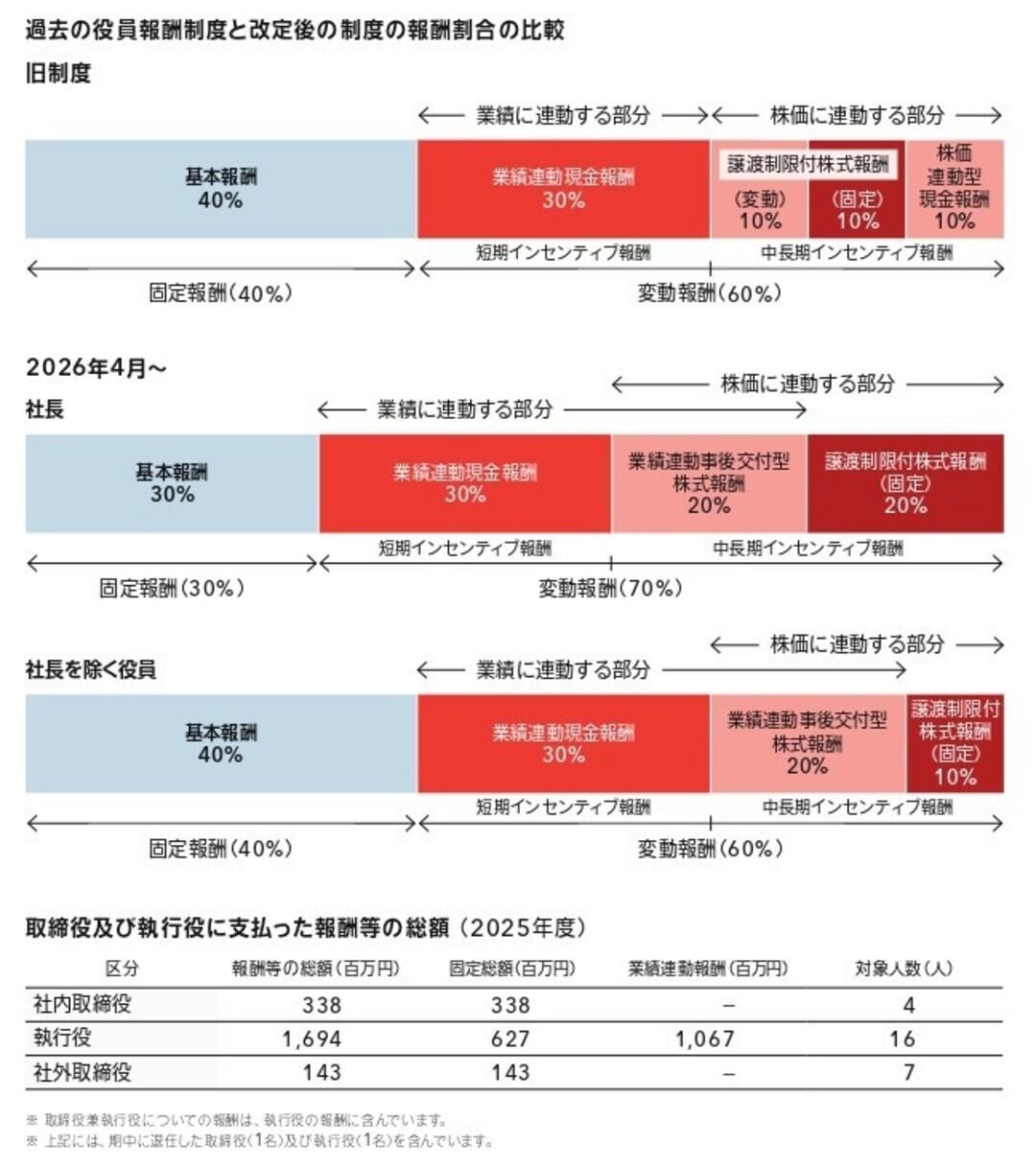
中長期的な目標達成に向けてより強くインセンティブを働かせる業績連動事後交付型株式報酬制度(業績評価期間及び業績評価指標を予め設定し、評価期間経過後に当該評価指標の達成度合いに応じて株式等を支給する報酬制度。パフォーマンス・シェア・ユニット。以下、PSU)を導入しました。PSUの業績評価指標としては、財務指標に加えて、執行役・執行役員・グループ執行役員に共通する全社的なESG指標を採用しました。なお、PSU導入に伴い、現行制度で支給する株価連動型現金報酬及び譲渡制限付株式報酬の変動部分を廃止しました(譲渡制限付株式報酬の固定部分は継続)。
②社長報酬構成割合の変更
長期経営計画及びその先を見据えた企業価値向上に向けて、経営トップのインセンティブをより働かせるため、社長報酬における変動報酬割合を全体の70%(現行60%)に変更しました。
改定後の当該方針は下記の通りです。
(1) Introducing a Performance-Based Post-Delivery-Type Stock Remuneration Plan and Adopting ESG Indicators
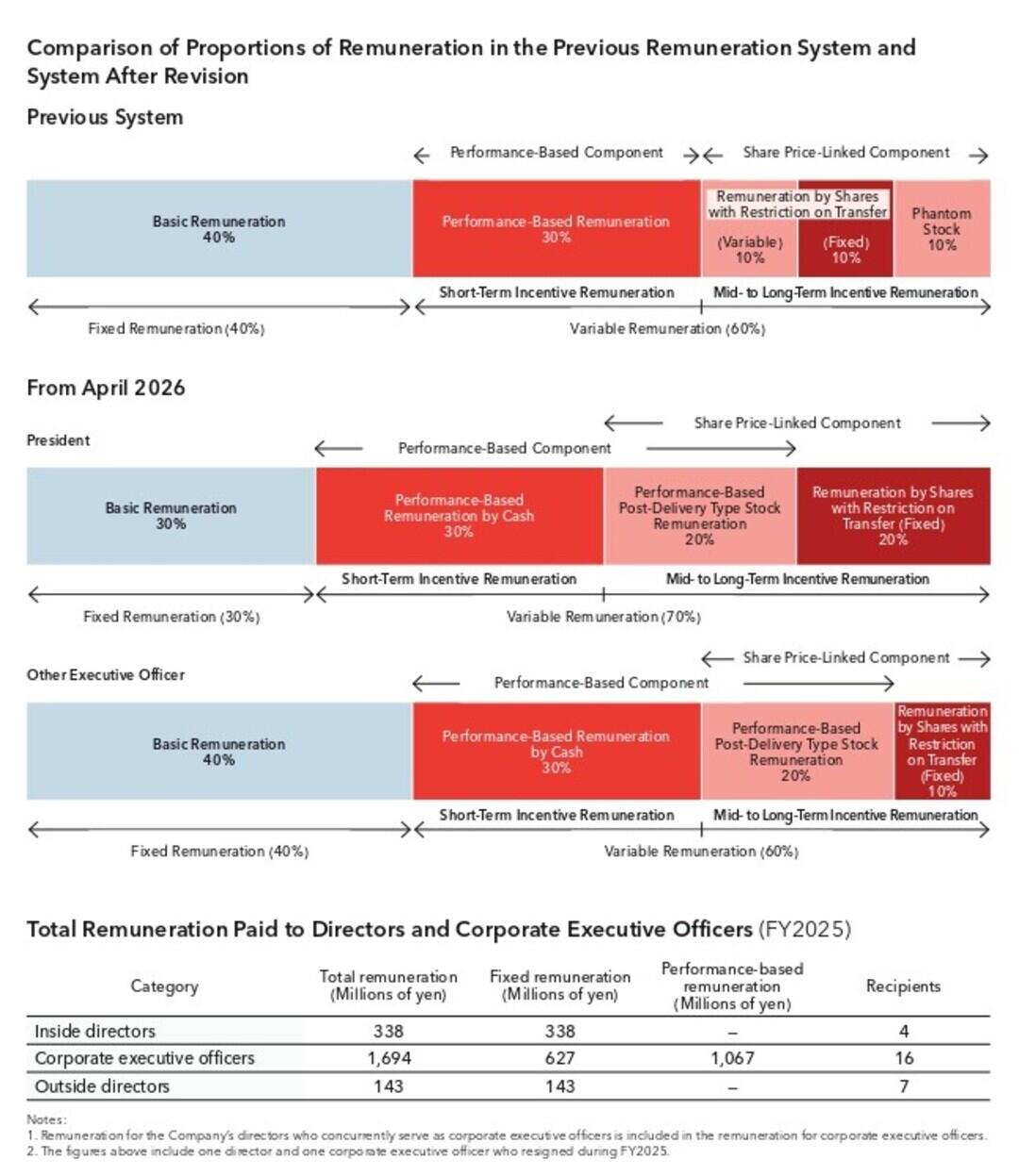
To create a stronger incentive to achieve medium- to long-term targets, the Company has introduced a performance-based post-delivery-type stock remuneration plan (Performance Share Units [hereinafter “PSUs”]). This is a remuneration system in which the performance evaluation period and the performance evaluation indicators are set in advance and shares, etc., are granted after the evaluation period in accordance with the degree of achievement of the evaluation indicators. In addition to financial indicators, company-wide ESG indicators common to the Representative Corporate Executive Officers, Senior Executive Officers, Executive Officers and Group Executive Officers are employed in the evaluation. In conjunction with the introduction of PSUs, the phantom stock remuneration and the variable component of the remuneration by shares with restriction on transfer granted under the current system were discontinued, while the fixed component of the remuneration is continued.
(2) Changing Composition of Remuneration for the President
In order to create a stronger incentive for top management to enhance corporate value with reference to the long-term management plan and beyond, the proportion of variable remuneration for the President was changed to 70% of the total (currently 60%).
In connection with this revision, provisions were established relating to ownership of the Company shares by its executive officers and provisions requiring the return of executive remuneration in the event that misconduct, etc. by an executive officer is confirmed (malus and clawback provisions) in the Policy on Determining Amounts of Executive Remuneration established by the Remuneration Committee.
The policy after revision is as on the right.
役員報酬等の額の決定に関する方針Policy Concerning Decisions on the Details of Remuneration, etc. for each Director and Corporate Executive Officer
①役員報酬の決定手続(i)Procedures for Deciding Remuneration Paid to Officers
当社の取締役及び執行役の報酬の内容に係る決定に関する方針及び個人別の報酬の内容については、社外取締役のみの委員にて構成される報酬委員会の決議により決定する。
The policy concerning decisions on the details of remuneration paid to Directors and Corporate Executive Officers of the Company and the details of remuneration for each person shall be decided upon by a resolution at the Remuneration Committee, which is comprised solely Outside Directors.
②役員報酬決定の基本方針(ii)The basic policy for deciding remuneration for Officers
当社の取締役及び執行役の報酬決定の基本方針は次の通りとする。
The basic policy for deciding remuneration for Directors and Corporate Executive Officers of the Company is as follows.
- 経営戦略や中長期経営計画における中長期的な業績目標等と連動し、持続的な企業価値の向上と株主との価値共有を実現する報酬制度とする。
- 戦略目標や株主をはじめとするステークホルダーの期待に沿った、経営陣のチャレンジや適切なリスクテイクを促すインセンティブ性を備える報酬制度とする。
- 報酬委員会での客観的な審議・判断を通じて、株主をはじめとするステークホルダーに対して高い説明責任を果たすことのできる報酬制度とする。
- The remuneration system shall be the one that is linked with our medium- to long-term performance targets, etc., aimed at in the management strategy and the Medium-to Long Term Management Plan and realizes sustained corporate value improvement and sharing of values with our shareholders.
- The remuneration system shall be the one that allows for giving incentives to management executives' taking up of challenges and appropriate risk-taking in line with the strategy targets and expectations of shareholders and other stakeholders.
- The remuneration system shall be the one that makes it possible to fulfill the high accountability for the benefit of our shareholders and other stakeholders through objective deliberations and judgments at the Remuneration Committee.
③役員報酬体系(iii)Remuneration Systems for Officers
取締役と執行役の報酬体系は、持続的な企業価値向上のために果たすべきそれぞれの機能・役割に鑑み、別体系とする。なお、執行役を兼務する取締役については、執行役としての報酬を支給することとする。
The remuneration systems for Directors and Corporate Executive Officers shall be separately established in consideration of their respective functions and roles to be fulfilled for the purpose of achieving sustained corporate value improvement. In addition, Directors who concurrently serve as Corporate Executive Officers shall be paid remuneration as Corporate Executive Officers.
-
取締役(執行役を兼務する取締役を除く)
執行役及び取締役の職務執行の監督を担うという機能・役割に鑑み、原則として金銭による基本報酬のみとし、その水準については、取締役としての役位及び担当、常勤・非常勤の別等を個別に勘案し決定する。 -
執行役
当社の業務執行を担うという機能・役割に鑑み、原則として基本報酬及び変動報酬で構成する。変動報酬は、短期的な業績等に基づき支給する金銭報酬と、中長期的な株主との価値共有の実現を志向し支給する株式報酬(譲渡制限付株式報酬及び中長期的な業績等に基づき支給する業績連動事後交付型株式報酬)等とで構成する。
基本報酬・変動報酬の水準及び比率、変動報酬の評価指標等については、経営戦略や中長期経営計画における中長期的な業績目標等、並びに執行役としての役位及び担当等を勘案し決定する。 -
Directors (excluding Directors who concurrently serve as Corporate Executive Officers)
In consideration of their function and role of supervising performance of duties by Corporate Executive Officers and Directors, they shall receive, in principle, only basic remuneration in the form of money, and the standards shall be decided upon individually taking into account factors such as position and responsibilities as Directors and whether they are full-time or part-time. -
Corporate Executive Officers
In consideration of their function and role of taking charge of business execution of the Company, their remuneration shall, in principle, be comprised of basic remuneration and variable remuneration. Variable remuneration is comprised of monetary compensation that is paid based on short-term performance, etc., and stock remuneration, etc. (including restricted stock remuneration and Performance-based post-delivery-type stock remuneration (Performance Share Units) that is paid based on medium- to long-term performance, etc.) that is paid with a view to realizing the medium- to long- term sharing value with shareholders.
The standards and ratios of basic remuneration and variable remuneration, valuation indicators for variable remuneration, and other matters shall be decided upon taking into account medium- to long-term performance targets, etc., aimed at in management strategies and the Medium- to Long- Term Management Plan and factors such as position and responsibilities as Corporate Executive Officers.
④自社株保有に関する基本方針(iv)Basic Policy on Shareholding of the Company’s Shares
当社は、取締役及び執行役が株主との価値共有を図ることを目的として、執行役社長については基本報酬年額の4倍相当以上(ほか執行役については基本報酬年額の1.5倍相当以上)の当社が報酬として付与した株式を保有することを求める。なお、対象役員は在任期間中において、上記株式数に達するまでの間、当該株式を保有継続し売却することができないものとする。
The Company shall require Directors and Corporate Executive Officers to hold shares of the Company granted as remuneration for the purpose of sharing value with shareholders. Specifically, the President and Chief Executive Officer shall hold shares equivalent to at least four times the amount of their annual basic remuneration, and other Corporate Executive Officers shall hold shares equivalent to at least 1.5 times the amount of their annual basic remuneration. Eligible Officers shall retain such shares and shall not sell them until the above shareholding level has been achieved during their term of office.
⑤マルス条項・クローバック条項の導入(v)Introduction of Malus and Clawback Provisions
当社は、ガバナンスの健全性を確保し、業務執行の説明責任と倫理的行動を促進することを目的として、当社役員報酬制度において、マルス条項及びクローバック条項を導入する。これにより当該条項の対象となる取締役及び執行役の非違行為や財務諸表の修正再表示が判明した場合には、報酬委員会の審議及び決議により、以下の通り対応することができるものとする。
The Company shall introduce malus provisions and clawback provisions in its remuneration system for Officers for the purpose of ensuring sound governance and promoting accountability and ethical conduct in business execution. In the event that misconduct by Directors or Corporate Executive Officers subject to such provisions or restatement of financial statements is identified, the following measures may be taken based on deliberation and resolution by the Remuneration Committee:
- マルス条項により、権利確定前の報酬について、付与・支給を取り消す。
- クローバック条項により、既に付与・支給された報酬について、生じた事由の重大性等を勘案し、最大3年間の報酬に遡って返還を求める。
- Under malus provisions, the grant or payment of remuneration prior to vesting may be cancelled.
- Under clawback provisions, taking into account the materiality of the relevant event, the Company may require the return of remuneration already granted or paid, retroactively for up to three years.
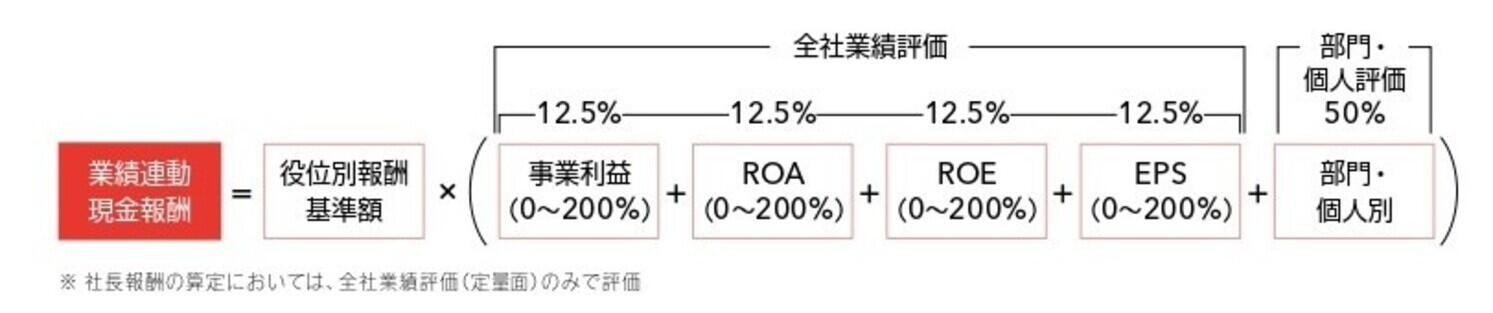
(1)業績連動現金報酬(1) Performance-Based Monetary Compensation
- 報酬形態:金銭
- 業績評価期間:1年間
- 報酬の決定方法及び主な評価項目: 全社の事業利益、ROA、ROE、EPS及び各役員が担当する部門の事業利益等の目標水準を基準とした、各指標の前年度実績等定量面に加え、部門・個人評価においては、社長面談による中長期的な業績への貢献度合い等定性面における評価も加味して決定
- Form of remuneration: Cash
- Performance evaluation period: One year
-
Payout calculation and major evaluation items:
The payout amount is determined based on the previous fiscal year’s performance and other quantitative factors for each indicator (e.g., overall business profit, ROA, ROE, EPS, and business profit in the divisions for which the individual officers are responsible) compared with their target level. In addition, in division and individual evaluations, qualitative factors are also considered in the evaluation, such as the degree of contribution to performance over the medium to long term as assessed during interviews with the president.

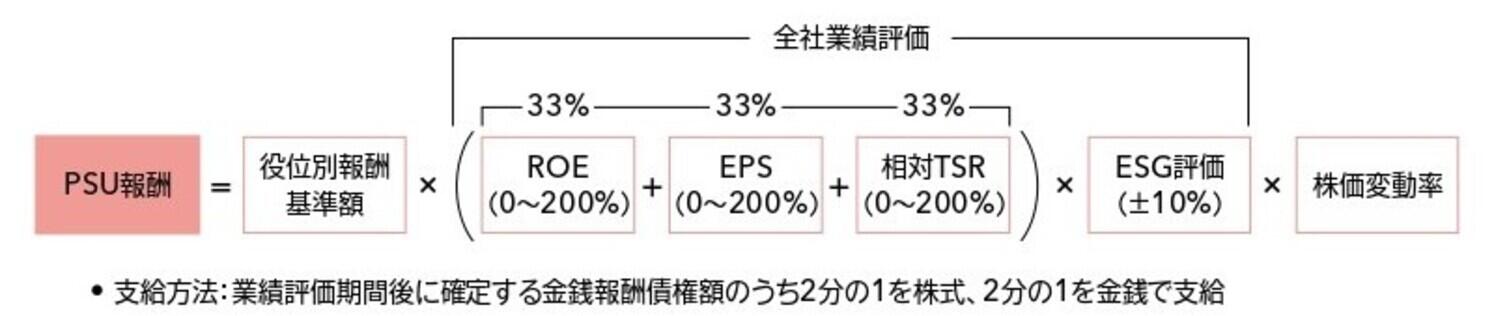
(2)業績連動事後交付型株式報酬(PSU報酬)(2)Performance-Based Post-Delivery Type Stock Remuneration (PSUs)
- 報酬形態:株式・金銭
- 業績評価期間:3年間
-
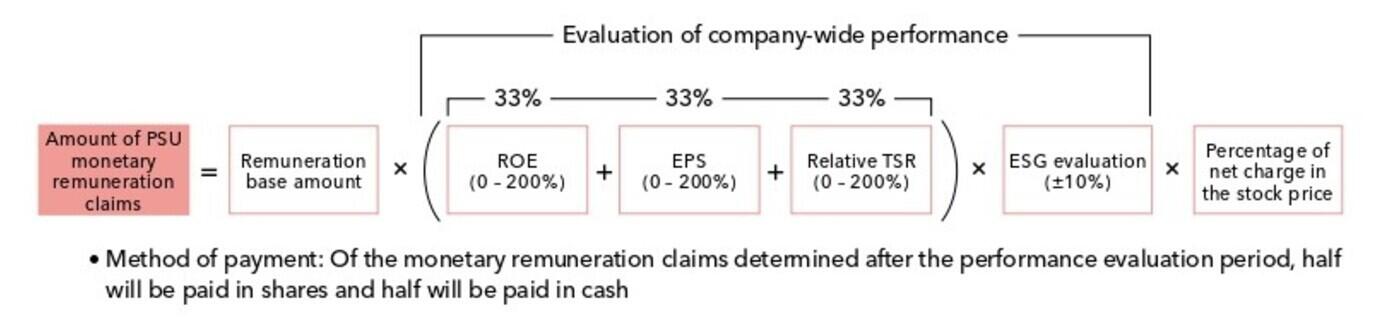
報酬の決定方法及び主な評価項目:役位ごとに定めた報酬基準額に以下(ⅰ)、(ⅱ)及び(ⅲ)を乗じ、金銭報酬債権額を決定
(ⅰ)業績評価期間における当社の財務指標(ROE:EPS:相対TSR=1:1:1)の達成度に応じた変動割合(変動幅は0%~200%)
※ 相対TSRについては業績評価期間における同業他社5社を含む6社間での株主総利回りの相対順位に応じた変動割合(変動幅は0%~200%)
なお、同業他社は、野村不動産ホールディングス株式会社、東急不動産ホールディングス株式会社、三井不動産株式会社、東京建物株式会社及び住友不動産株式会社
(ⅱ)業績評価期間における当社の社会価値向上に資する取り組みを評価するESG指標の達成度に応じた変動割合(変動幅は±10%)
※ ESG指標については、「事業活動を通じた社会課題解決の取り組み」「GHG排出削減の推進」及び「DE&I推進、活力ある職場づくり」に関する取り組みを評価する指標として、GHG排出量原単位の削減率や従業員エンゲージメントスコア等の定量指標を定め、全役員同一の指標で運用
(ⅲ)業績評価期間における当社普通株式の株価変動割合 - Form of remuneration: Shares and cash
- Performance evaluation period: Three years
-
Payout calculation and major evaluation items: The payout amount of monetary remuneration claims will be determined by multiplying each officer's base amount by factors (i), (ii), and (iii) described below.
(ⅰ)A variable percentage (ranging from 0% to 200%) corresponding to the degree of achievement of the Company's financial indicators (ROE : EPS : Relative TSR = 1 : 1 : 1) during the performance evaluation period
* For relative TSR, a variable percentage (ranging from 0% to 200%) corresponding to the relative ranking of total shareholder return among six companies, including five peer companies, during the performance evaluation period
Five peer companies: Nomura Real Estate Holdings, Inc., Tokyu Fudosan Holdings Corporation, Mitsui Fudosan Co., Ltd., Tokyo Tatemono Co., Ltd., and Sumitomo Realty & Development Co., Ltd.
(ⅱ)A variable percentage (range of variation ±10%) corresponding to the degree of achievement of ESG indicators that evaluate initiatives contributing to enhancing the Company's social value during the performance evaluation period
* For ESG indicators, quantitative indicators (e.g., reduction in GHG emissions intensity, employee engagement score) common to all executives have been established to evaluate initiatives in the following areas: "efforts to solve social issues through business activities," "promotion of GHG emission reductions," and "promotion of DE&I and creation of a vibrant workplace."
(ⅲ)Percentage of net change in the Company's common stock price for the performance evaluation period
(3)譲渡制限付株式報酬(固定)(3)Remuneration by Shares with Restriction on Transfer (Fixed)
-
報酬形態:株式
※ 役位ごとの報酬基準額に応じた金銭報酬債権額の株式を支給 - 譲渡制限期間:役員(非執行の取締役を含む)退任時まで
-
Form of remuneration: Shares
* Shares are granted for the amount of monetary remuneration claims corresponding to each officer’s base amount of remuneration. - Transfer restriction period: Until resignation as an officer (includes non-executive directors)